
i tried all the cannabis apps so you don't have to.
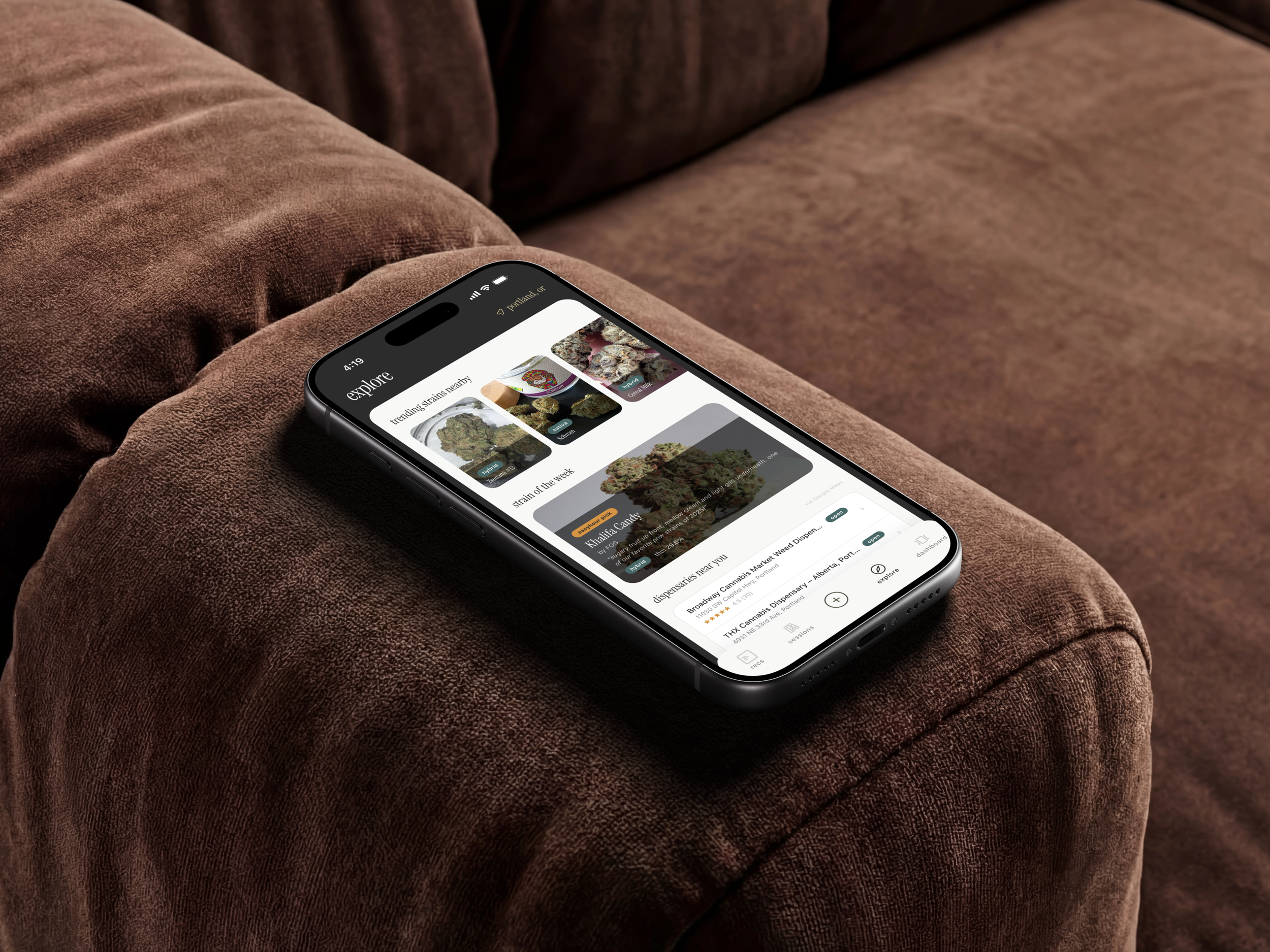
there are more cannabis apps than you'd think. strain databases, dispensary finders, loyalty programs, tolerance trackers, recommendation engines — the app stores are full of them. most are fine. a few are genuinely useful. almost none of them feel like something you'd actually want to open every day. here's what's out there, and what's still missing.
the obvious ones are the strain databases, leafly and weedmaps, and credit where it's due: as encyclopedias they're genuinely good. they'll tell you what a strain is supposed to feel like based on thousands of aggregated reviews, which is useful for research. but that's a different question than the one most people are actually asking. they won't tell you what it felt like for you, in your body, on a tuesday night after a long day — they're not built to, and honestly they're built as much for dispensaries as for the person holding the jar.
then there are the medical trackers, a handful of apps built around symptom logging and dosage for medical patients. they're thorough, and for patients they do the job. but they're built for a completely different use case, and if you're not a patient they feel like filling out a form at a doctor's office instead of logging a moment you actually want to remember.
the dedicated strain journals are closer to the idea, and most of them mean well, but somewhere between the neon green color schemes, the forty-seven-question session forms, and the interfaces that look like they were designed in 2012, something gets lost. they feel like homework. they feel like data entry. they don't feel like something you'd reach for at the end of a good day when you just want to remember what you tried.
reddit deserves a mention too, because r/trees and the rest are genuinely great communities — real people, honest opinions, zero agenda. but it isn't personal and it isn't searchable for your own history, and finding a rec that's actually relevant to you means a lot of scrolling and hoping someone happened to be after the same thing you are.
and then there's the notes app, which is what a lot of people actually use. it works, technically — right up until you've got forty-seven untitled notes and no idea which one has the strain you loved six months ago. no structure, no patterns, no way to learn from what you wrote down.
after going through all of it, the gap was obvious: nothing felt calm, and nothing was built for the intentional everyday user. not a medical patient, not someone chasing the loudest high, not someone building an audience — just someone who wants to remember what they tried, understand what worked, and find honest recommendations from real people without the noise. none of this is a knock on any of those apps; each one is the right tool for someone, and you might land on one that fits you better, which is completely fine. they just weren't built for the thing we wanted.
so we built easyhour for that person. a session journal fast enough to fill out in the moment, calm on purpose, with no streaks or gamification and no algorithm deciding what you see next — plus a quiet social layer of honest recs from real people near you, no follower counts, no sponsored posts. (we get into exactly how it works in what easyhour actually is.) it's free on the ios app store, and more than anything, it looks like something you'd actually want to open.